What is lung cancer?
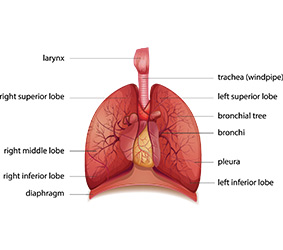 The lungs let us breathe in oxygen from the air and expel (breathe out) carbon dioxide waste from our body.
Lung cancer is a cancer of the cells of the lungs. When cells become old or damaged, the body will replace them with new cells. Usually, the process of cell division and replacement happens in a controlled way. However, when cells become cancerous or malignant, damage to the DNA (the genetic instructions in each cell) cause them to look and behave differently from normal cells. Cancer cells reproduce uncontrollably and start to invade nearby tissue or even travel to other parts of the body (a process known as metastasis). This abnormal growth can prevent the lungs from functioning normally.
Lung cancer is the second most common cancer diagnosed in Ontario (breast cancer is the most common). Lung cancer is the most common cause of cancer death.
There are 2 main types of lung cancer: non-small cell lung cancer, which makes up about 85% to 90% of all cases, and small cell lung cancer. A form of cancer called pleural mesothelioma also affects the lining of the lungs (the pleura). This form is very different from lung cancer and is usually caused by breathing in asbestos.
Risk factors you can change or control

Smoking
Studies show that someone who smokes is nine to 20 times more likely to get lung cancer than someone who does not smoke. The more you smoke and the longer you smoke, the higher your risk. Cigars are no safer than cigarettes because they also raise the risk of lung cancer.
Smoking is responsible for 71% of all cases of lung cancer in Ontario. Although the incidence (new cases) and mortality (death) rates of lung cancer have gone down in men, they increased in women during the 1980s and 1990s, and levelled off in the late 1990s. These differences are probably because smoking rates went down faster in men than in women over the last few decades. At the same time, it is important to know that even people who do not smoke can get lung cancer.
Tobacco smoke is dangerous because it damages the cells of the lungs and can cause mutations in cell DNA. Some of the chemicals in tobacco smoke also affect genes that help prevent the growth of tumours and get rid of damaged cells.
When someone quits smoking, the lungs begin to repair themselves. The risk of lung cancer begins to fall within 2 to 5 years after quitting. Within 10 years, the risk of lung cancer falls by about half (about 30% to 50%). If someone quit smoking before age 40 and more than 20 years ago, they have the same risk of lung cancer as someone who has never smoked. The earlier in life someone stops smoking and the longer they are smoke-free, the lower their risk becomes.
Second-hand smoke
Being around someone who is smoking tobacco (called second-hand smoke or passive smoking) means you are breathing in the cancer-causing chemicals in their smoke. Living with someone who smokes or being exposed to second-hand smoke at work can raise the risk of getting lung cancer in someone who does not smoke by 20% to 40%. The longer someone is exposed to second-hand smoke, the higher their risk. Some studies suggest that breathing in second-hand smoke as a child may raise the risk of lung cancer in adulthood.
Environmental or workplace exposures
-
Living in or near a large city
Someone living in or near a large city for at least 10 years is exposed to emissions (chemicals in the air) from vehicles, industrial plants and heating from homes. When these emissions are breathed in, they can settle deep in the lungs and damage them, which increases the risk of lung cancer. The risk is highest for people who live near major highways and roads.
-
Asbestos
Although you can come into contact with asbestos outside of the workplace, most people are exposed to it at work. Asbestos is a group of six minerals that are found in some rocks and soil. Because asbestos is resistant to heat, it was used for a wide range of purposes and products. People can be exposed to asbestos during the weathering or mining of natural asbestos deposits or products, or disturbing materials that have asbestos in them, such as during demolition work, building, home repair or remodelling. When asbestos is disturbed or damaged, it can go into the air. If asbestos fibres are breathed in, they can lodge in the lungs, causing damage and inflammation that raises the risk of getting lung cancer. People who are exposed to asbestos will have an even higher risk of getting lung cancer if they also smoke.
Talk to your supervisor, health and safety specialist, industrial hygienist or local union representative about asbestos exposure in your workplace. Some questions to ask are:
- Is asbestos part of our health and safety training?
- Has any air monitoring been done? If so, how did the results compare to the workplace exposure limits for asbestos?
- What has been done to lower asbestos exposure?
- Have all potential sources of asbestos been marked and labelled?
-
Workplace exposure to other substances or processes
It is important to talk with your supervisor, health and safety specialist, industrial hygienist or local union representative if you think you may be exposed to any of the following substances or processes in your workplace. Health and safety measures, including workplace controls and personal protective equipment, should be used by your employer and you to lower your exposure.
Arsenic and inorganic arsenic compounds
Arsenic is a chemical that was used in the past and is still used in several industries, such as the making of some metals, pharmaceuticals, wood preservatives, agricultural chemicals, pesticides, alloys and glass. It is also used in the mining and smelting industries. Another potential way people can be exposed to arsenic is by burning fossil fuels, such as coal or gas. Workplace exposure to arsenic can significantly raise the risk of getting lung cancer. Some studies also show that people who smoke may be more sensitive to the damaging effects of arsenic.
Diesel engine exhaust
The exhaust from diesel engines contains a complex mixture of particles that are small enough to be inhaled deep into the lungs. These particles can damage the lungs and raise the risk of getting lung cancer. People who have a higher risk of getting lung cancer as a result of diesel engine exhaust include underground miners, truckers, railway workers, heavy equipment mechanics and construction workers (among others). The risk goes up the more someone is exposed.
Radon
Radon is a radioactive gas that has no colour or smell. It can be found naturally in the environment when uranium and other radioactive substances decay. The radon levels in the environment are different in each part of the country – or even in parts of the same region or from building to building. Depending on their geographic location, people who work in underground mines, subways, tunnels, construction exaction sites or basements may be exposed to radon. If radon is in a building or site that is not well ventilated, radon gas can build up. If radon gas is breathed in, it can raise the risk of damage to the lungs and of getting lung cancer. Studies have consistently shown that people who are exposed to radon and smoke have an even higher risk of lung cancer.
Silica dust and crystalline silica
Silica and crystalline silica are naturally found in some rocks, sand, granite, clays and other minerals. Common forms of crystalline silica include quartz and cristobalite. Sand and gravel are used in manufacturing glass and ceramics, as well as in foundries. Quartz crystals are used in the making of jewellery, electronics and optical equipment. Another form of silica called diatomaceous earth is used as a filler in pesticides, cleaners and other products. People who tend to be exposed to silica dust and crystalline silica include people who work in industries where silica is used, such as miners and farmers, as well as people who are involved in the demolition of concrete, abrasive blasting, stone cutting and quarry work. When silica particles are breathed in, they settle deep in the lungs. Long-term exposure to silica dust and crystalline silica can prevent the lungs from clearing away debris and cause ongoing inflammation. This inflammation can raise the risk of getting lung cancer.
Nickel compounds
Nickel is a hard metal found in many ores used in the mining, milling and smelting industries. Exposure to nickel compounds can take place in the manufacturing of metal alloys, steelmaking, metal plating and electroforming plants, nickel refineries, petroleum refineries, fats and oils hydrogenation plants, coal gasification and battery production plants. People who are exposed to nickel at work have a higher risk of getting lung cancer than people who are not exposed.
Beryllium and beryllium compounds
Beryllium is a metal that is naturally found in some rocks, coal, oil, soil and volcanic dust. It is used to make metal alloys, such as those used in airplanes, cars and trucks, computer and photography equipment, sports equipment and a number of consumer products, including dental bridges. Workplace exposure to beryllium compounds in the air and beryllium dust are the most common ways to be exposed and can take place in the energy, electrical, defense and fire prevention industries. People working in beryllium processing plants have a higher risk of getting lung cancer. The risk goes up with the length and amount of the exposure.
Cadmium and cadmium compounds
One of the most common ways to be exposed to cadmium is cigarette smoke because cadmium is one of the many chemicals found in cigarette smoke. Cadmium is a soft metal that is used to make pigments and nickel-cadmium batteries, as well as in the metal-plating and plastics industries. Workplace exposure to cadmium can also happen at zinc, lead or copper smelters. People who are exposed to cadmium at work have a very high risk of getting lung cancer.
Chromium (VI) compounds
Chromium is a metal that is naturally found in rocks, animals, plants and soils. There are several types of chromium. Chromium (VI) or hexavalent chromium is present during chrome plating, the production of ferrochrome (a chromium and iron alloy) and the manufacture of textile dyes, paints, inks, toners for copying machines, pigments, wood and leather preservatives, plastics, and corrosion inhibitors. It is also used in the treatment of cooling tower water and drilling muds. Other industries where people may be exposed to chromium (VI) include ore refining, stainless steel production, the production of some chemicals and substances used in high-temperature processes (refractory production), cement-producing plants, and the manufacture of automobile brake lining and catalytic converters. People who are exposed to high levels of chromium (VI) have a higher risk of getting lung cancer, even if they do not smoke.
X-ray and gamma radiation
Depending on how much radiation someone is exposed to, X-ray and gamma radiation may damage their lungs and increase the risk of getting lung cancer. People who work close to X-ray or gamma radiation sources may be exposed to radiation for long periods of time.
-
Workplace exposures by industry
If you work in certain industries, you can be exposed to metals, dust, fibres, gases or other substances that may raise the risk of getting lung cancer. In each industry, the amount of cancer-causing substances varies depending on the type of process used and what safety controls are in place to lower exposure. Exposure to cancer-causing substances can also vary based on how close you work to them, how long you have worked in that job and whether you have been using protective clothing and devices, such as respirators and gloves.
You cannot change where you’ve worked in the past or possibly even where you work in the future. But you may be able to help lower your risk by using the right protective equipment and making other healthy choices.
-
Painting
The chemicals in paints and stains are different for every type of paint and stain. Exposure to these chemicals is also different for each type of painting job, such as construction painters, artistic painters and consumer production painters. Painters and people who work in places where paints or dyes are made may breathe in or have skin contact with cancer-causing substances, such as arsenic, cadmium, chromium (VI), nickel and silica. The risk of getting lung cancer is higher if someone does not use protective equipment, such as respirators and gloves.
-
Iron or steel founding
Iron and steel foundries can use different processes and materials that expose workers to a wide variety of chemicals, metals, dust and gasses. Substances in foundries that could cause cancer include silica dust, polycyclic aromatic hydrocarbons (PAHs), and airborne chromium and nickel compounds. The risk of getting lung cancer goes up with level of exposure and how long someone has worked in the industry.
-
Rubber manufacturing
Workers in the rubber manufacturing industry are exposed to dust and other substances during the making, handling, milling, extruding, curing and assembling of natural and synthetic rubber products. The exact chemicals used have changed over time, and depend on the factory’s equipment and the type of product being made. Long-term exposure to some of the substances involved in the rubber-making process may raise the risk of getting lung cancer.
-
Coke ovens
Coke is coal that has been carbonized for use in iron-making blast furnaces and other metal-smelting industries. People who work around coke ovens are exposed to substances that could raise the risk of getting lung cancer. Some of these substances are polycyclic aromatic hydrocarbons (PAHs) and vapours (volatiles) from coal tar (a sludgy byproduct when coal is burned to make coke or used to make coal gas) or coal tar pitch (the residue produced when coal tar is heated). People who work around coke ovens may also be exposed to other cancer-causing substances, such as asbestos, silica, arsenic, cadmium and nickel.
-
Coal gasification
The process of turning coal into other forms of energy, such as synthetic natural gas, releases cancer-causing chemicals, including polycyclic aromatic hydrocarbons (PAHs), arsenic, asbestos, silica, cadmium, nickel and other chemicals. People who work in coal gasification plants have a higher risk of getting lung cancer.
-
Aluminum smelting
People who work in factories where aluminum is produced may be exposed to cancer-causing substances, such as coal tar, coal tar pitch vapours (volatiles) or polycyclic aromatic hydrocarbons (PAHs). Long-term exposure to these substances could raise the risk of getting lung cancer.
-
Risk factors you cannot change or control

Family history
Some studies show that having a first-degree relative, such as a biological parent, sibling or child (an immediate family member related to you by blood), with lung cancer could raise someone’s risk of getting the disease. Some of this risk may be due to shared behaviours, such as smoking or breathing in second-hand smoke. Researchers are still trying to figure out if there is a genetic mutation for lung cancer that can be passed down through families.
What you can do to protect yourself
Screening: The Ontario Lung Screening Program (OLSP)
The Ontario Lung Screening Program (OLSP) is Ontario’s organized screening program for people at high risk of getting lung cancer.
To participate in lung cancer screening, you must have an OHIP card and meet the following criteria:
- are 55 to 80 years old
- have smoked commercial tobacco every day for at least 20 years (it does not have to be 20 years in a row, which means there could be times when you did not smoke). Commercial tobacco includes cigarettes, cigars, loose tobacco, pipe tobacco or bidi/beedi.
- have done a risk assessment with an OLSP site hospital staff member that shows that you are at high risk for lung cancer.
You can be connected to the OLSP by your doctor or nurse practitioner, or you can contact an OLSP site on your own to see if you qualify to participate.
Learn more:
- Visit Ontario Lung Screening Program – Cancer Care Ontario for more information on the program and to find program locations.
- For questions about OHIP coverage, call ServiceOntario
INFOline at 1-866-532-3161
TTY 1-800-387-5559
Monday to Friday
8:30 a.m. to 5 p.m.
If you qualify to get screened in the OLSP, a doctor or nurse practitioner will need to send you for your screening tests. If you do not have a doctor or nurse practitioner, call Health811 at 811 (TTY: 711) or visit ontario.ca/healthcareconnect. You can also contact an OLSP location directly to get help finding a doctor or nurse practitioner.
Be smoke-free
The single most important thing you can do to lower your risk of getting lung cancer is to be smoke-free, which means avoiding smoking all tobacco products (cigarettes and cigars) and breathing in second-hand tobacco smoke.
When someone quits smoking, their health starts to improve right away, including:
- Better sense of taste and smell.
- Better lung capacity within weeks as damaged cells are replaced.
- Less coughing, sinus congestion and shortness of breath.
Within a few years of quitting, the risk of getting lung cancer starts to drop. The risk of other diseases, such as heart disease, also starts to drop. The younger someone is when they quit and the longer they remain smoke-free, the lower their risk of getting lung cancer.
Tips if you are thinking about quitting now or soon:
- There is no one “right” way to quit. Different people may use different approaches, so it is good to learn about all of your options. For example, nearly 6 out of 10 people who try to quit smoking use something to help them, such as nicotine replacement therapy, prescription medications, calling telephone quit lines or taking a smoking cessation class. Talk with your doctor, nurse practitioner or pharmacist about the different options and which may be better for you.
- Planning is the key to success. Make a plan for how you will quit (cutting down, cold turkey or using a smoking cessation aid), when you will start (your quit date), and who will help you and be your quit smoking buddy or coach.
-
Write out your reasons for quitting and post them someplace where you will see them regularly. Everyone has their own reasons to quit. It may be something like:
- I want to feel better.
- I don’t want to die and leave my family.
- I don’t like how I look when I smoke cigarettes.
- I don’t want to pollute the air my family breathes.
- I’m tired of being out of breath.
- I don’t like how cigarettes make me smell.
- Most people who smoke find that certain places or activities trigger them to smoke. Think about your smoking triggers and what you can do to avoid these places or activities. Then try to think of what you can do to avoid these places or activities. For example, if you always have a cigarette with your morning coffee, switching to tea or drinking your coffee later in the day can help you change your routine.
- Finding it hard to make the change? It may help to see how much money it costs to smoke with the Healthy Canadians Cost Calculator.
-
Many people use cigarettes to relieve their stress. But the costs and risks of cigarettes can actually increase the stress in your life. Research suggests that instead of a cigarette, it can be helpful to practice deep breathing. Deep breathing is quick, free and easy to learn:
- For 3 seconds, slowly take a deep breath in through your nose. As you inhale, let your abdomen expand.
- Hold the breath for 3 seconds.
- For 6 seconds, slowly exhale through your mouth. Feel your abdomen moving in.
- Repeat 3 to 5 times.
Deep breathing can not only help you relax, but it can also help reduce cigarette cravings and give you energy because it increases oxygen and blood flow to the brain. Try it the next time you feel like having a cigarette.
For some more ideas, tips and resources, see the following:
- Speak to a Quit Coach at Health811 for quit smoking support by calling 811 (TTY: 711).
- Visit Smokers’ Helpline to join an online chat forum with people planning to quit, people who have quit, Quit Coaches and to see more resources. You can also text iQuit to the number 123456 (in Ontario) for quit support.
- Visit the Ontario Ministry of Health’s Quit Smoking website.
- Visit Health Canada’s On the Road to Quitting program.
- Visit QuitMap.ca to find a quit smoking counsellor or group in your community.
- Visit Make Your Home and Car Smoke-Free.
- Visit the Indigenous Tobacco Program website to find resources for First Nations, Inuit, Métis and urban Indigenous peoples.
Tips if you do not feel ready to try:
- Write down how you would feel if you could quit. For example, would you feel better about yourself and more in control of your life? Would you be a better role model for your children or loved ones? Would it give you a better chance of being healthy in retirement? Think about what your life would be like if you could quit.
- Keep track of your smoking. Sometimes just seeing how much you are smoking – and being more aware of when you are reaching for a cigarette – can help you cut back. Keep a count of every cigarette you smoke on your cell phone, a piece of paper or your computer.
- Make an appointment with your doctor or nurse practitioner, or speak with your pharmacist about smoking cessation aids and programs that might make it easier for you to quit. Learn about all your options so you can think about what you might do in the future.
- Remember that everyone can change. Just because you are a person who smokes today does not mean you have to be one tomorrow. Millions of people in Canada – including people who smoked for many years – have quit. Every time you try to quit, you are moving closer to the goal of being permanently smoke-free.
- Knowing how much smoking is costing you may help motivate you to quit. Find out at the Healthy Canadians Cost Calculator.
-
When you feel ready to start making changes, check out some of these great resources:
- Speak to a Quit Coach at Health811 for quit smoking support by calling 811 (TTY: 711).
- Visit Smokers’ Helpline to join an online chat forum with people planning to quit, people who have quit, Quit Coaches and to see more resources. You can also text iQuit to the number 123456 (in Ontario) for quit support.
- Visit the Ontario Ministry of Health’s Quit Smoking website.
- Visit Health Canada’s On the Road to Quitting program.
- Visit QuitMap.ca to find a quit smoking counsellor or group in your community.
- Visit Make Your Home and Car Smoke-Free.
- Visit the Indigenous Tobacco Program website to see resources for First Nations, Inuit, Métis and urban Indigenous peoples.
Tips for avoiding second-hand smoke:
- Think of when and where you are exposed to second-hand smoke. Is it at home, in the car or in public places? Once you have identified where and when this is happening, try to think of ways you can change the situation. Could you ban smoking from your home or car?
- Asking friends and family not to smoke around you can be hard. But remember that you are doing this to protect your health. Explain how their smoking can affect your health.
- Focus on your long-term goals, including a long and healthy life with the people you love.
-
More resources to help you include:
- How to be a positive influence and help someone quit smoking.
- How to Make Your Home and Car Smoke-Free.
- Visit the Indigenous Tobacco Program website to see resources for First Nations, Inuit, Métis and urban Indigenous peoples.
Protect yourself at work
You cannot change where you worked in the past or maybe even where you’ll work in the future. To protect yourself, talk to your supervisor, health or safety specialist, industrial hygienist or local union representative about exposures in your workplace. Ask:
- Could there be cancer-causing substances in the air at work?
- Has air monitoring been done in your workplace and what are the cancer-causing substance levels like compared to the workplace exposure limits?
- What has been done to control or lower your exposure?
Employers and employees have responsibilities for controlling and lowering exposure in the workplace. Your employer is responsible for putting in place engineering controls and administrative controls, such as using safer alternatives, ventilation and enclosures, and lowering time in exposed work situations. Your employer should also give training and personal protective equipment to employees when needed.
Employees can take action to protect themselves. Things that you, as an employee, can do include:
- Being aware of the cancer-causing materials used in your workplace.
- Following the health and safety rules given by your employer.
- As much as possible, working away from the source of exposure and lowering the amount of time you handle cancer-causing materials.
- Using the right protective equipment, such as respirators, protective clothing, gloves, boots or face shields.
- Practicing safe work practices, such as using local exhaust ventilation and partial enclosures whenever possible.
- Avoiding eating or drinking in places where there are gases, fumes or dust.
- Using good hygiene and housekeeping practices, such as keeping surfaces at your workspace clean, skin decontamination at breaks and at the end of work, and washing your work clothes regularly.
- Using disposable or reusable work clothes that stay at the work site so you do not bring any cancer-causing substances home.
Even if you do not have any symptoms of lung cancer, such as coughing or trouble breathing, tell your doctor or nurse practitioner about your workplace exposure because it is important for them to know about.

Learn More:
- To learn more about cancer-causing substances that Canadians may be exposed to at work, visit the CAREX Canada website.
- To ask questions about workplace exposures, go to the Canadian Centre for Occupational Health and Safety or call 1-800-668-4284.
- Learn about workplace health and safety standards at the Ministry of Labour, Immigration, Training and Skills Development (MLITSD) website or call the MLITSD Health and Safety Contact Centre at 1-877-202-0008 (TTY 1-855-653-9260).
Find out about radon
Levels of radon are different across the province. Even in the same area, radon levels can vary from house to house and at different times of the year. If you want to know the radon levels in your home or building, or if radon has been found, Health Canada has recommendations to guide you.
Learn More:
Lower your risk from air pollution
If you live in a major city, check your local air quality index regularly and plan your activities based on the air quality. On days when the air quality is bad, you may want to avoid being active outdoors, especially in high-traffic areas.
Learn more:
- Visit Air Quality Ontario.
- To hear a recording of Air Quality readings and forecasts dial 1-800-387-7768 (416-246-0411 in Toronto) for information in English or 1-800-221-8852 for information in French.
- Find out more about road traffic and air pollution.